

What is a breech presentation?
A breech presentation refers to a baby positioned in the uterus with their buttocks or feet (or one foot) down, rather than the typical head-down position expected for birth. This is relatively common earlier in pregnancy, but most babies turn head-down by the third trimester. If the baby remains breech closer to term, it may influence how delivery is planned.
There are a few different types of fetal positions that can affect delivery:
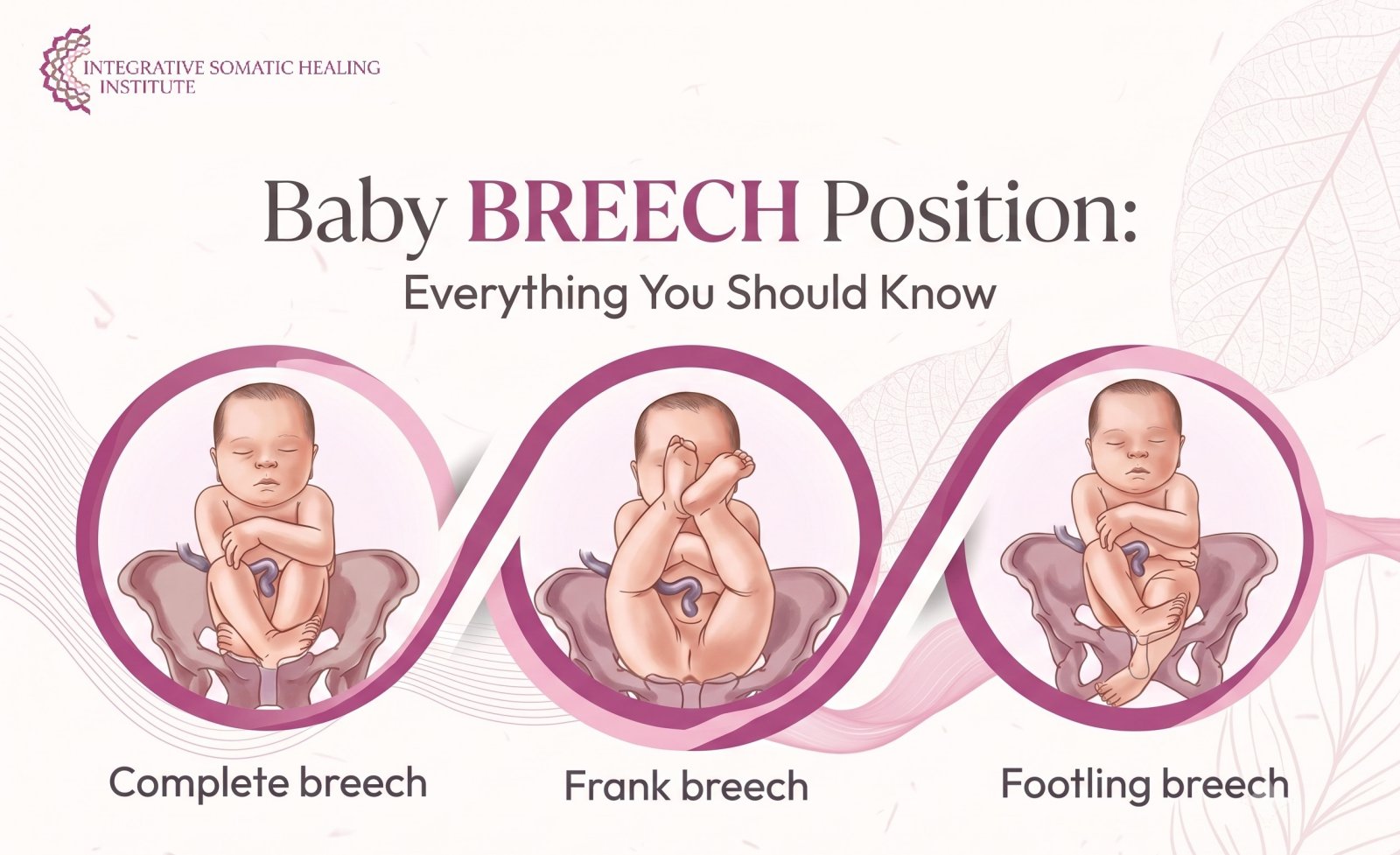
Breech: Baby’s bottom or feet are closest to the cervix. This can be further classified into frank breech (bottom down, legs up), complete breech (bottom down, legs crossed), or footling breech (one or both feet first).
Transverse lie: Baby is lying sideways across the uterus, rather than vertically. This position makes vaginal delivery impossible unless the baby turns.
Oblique lie: Baby is positioned at an angle, neither fully vertical nor horizontal. This is often a transitional position that may resolve on its own.
Understanding these positions—and what might contribute to them—can help you feel more informed and supported as you explore your options. In the rest of this article, we’ll cover the common reasons a baby might be breech, ways to support optimal positioning, and how conservative therapies like those offered at Pelvic Soul may help.
When is breech position diagnosed?
A breech presentation is usually diagnosed as early as the 20-week appointment, or at a further appointment around 28–30 weeks during a routine prenatal visit, where your OBGYN or midwife may check the baby’s position through a physical exam. If breech is suspected, palpation or an ultrasound may be done, typically between 32–36 weeks, to confirm the baby’s position and check for other factors. While many babies turn head-down by 36 weeks, breech presentations can still be identified later in pregnancy, and your provider will discuss options for delivery or ways to help turn the baby if necessary.
Is Breech delivery safe?
In the past, OBs and midwives were trained to assist with breech deliveries. However, in recent years, many hospitals have moved away from allowing breech vaginal births due to safety concerns and liability issues. That said, some providers with additional training may still offer vaginal breech deliveries under specific conditions, approving them on a case-by-case basis. Despite this, a significant number of OBs and midwives continue to recommend elective C-sections when the baby is breech.
Why Is My Baby Breech? 6 Common Reasons Explained
While there’s no single proven cause for why a baby may be breech, several factors are believed to contribute:
1. Structural Misalignment in the Pelvis & Soft Tissue Tension Around the Uterus
Soft tissue tension around the uterus, particularly in the ligaments and surrounding muscles, can also impact the alignment of the pelvic inlet and midpelvis. This matters because the baby’s head (the largest part) needs adequate space to settle into the pelvis. If that space is restricted, the baby’s buttocks or feet (being smaller) may settle there instead, contributing to a breech position.
The shape and structure of your pelvis and uterus can significantly influence your baby’s position. For example, a bicornuate (heart-shaped) uterus or the presence of fibroids may limit space or create uneven contours that make it harder for your baby to rotate into a head-down position. Likewise, a tight or asymmetrical pelvis—whether due to genetics, previous injury, or muscle tension—can restrict movement and affect how the baby settles.
Additionally, a history of pelvic floor muscle dysfunction—such as pelvic pain, vaginismus, constipation, or chronic tension—has been clinically associated with a higher rate of breech babies. Certain activity patterns may also play a role. High-intensity workouts like running, CrossFit, spinning, or heavy weight lifting (especially more than 3–4 times per week) can contribute to elevated pelvic floor tone. Some Pilates practices, particularly those that emphasize repetitive tailbone tucking, may reduce tailbone flexibility and mobility, which correlates with transverse, oblique, and breech positions.
Lastly, wearing restrictive clothing or tight belly bands for extended periods may also affect fetal positioning. Overuse of external support can hold the abdominal muscles up too much, limiting the natural drop of the uterus and making it harder for baby to engage in the pelvis—potentially affecting positioning and delaying labor onset.
How can pelvic floor therapy help?
At Pelvic Soul, we offer gentle pelvic and osteopathic therapy tailored to create more space and mobility in the pelvis—key factors in supporting optimal conditions for your baby to turn into a head-down position. Our approach includes both external and internal techniques designed to improve the flexibility and balance of the pelvis, addressing restrictions in muscles, ligaments, and joints that may be influencing your baby’s position.
We’re proud to offer a dedicated breech protocol, a specialized treatment approach developed specifically for expecting mothers with breech babies. This protocol is unique to our practice and is performed exclusively by our trained providers. It incorporates hands-on techniques that support the body’s natural ability to align and release tension, while also creating a calm, supportive space for emotional processing that may be affecting your experience of pregnancy and baby positioning.
2. Too Much or Too Little Amniotic Fluid
Amniotic fluid acts like a cushion and allows your baby to move and rotate throughout pregnancy. When there’s too much fluid (a condition called polyhydramnios), the baby may move excessively, making it harder for them to stay in one position—especially head-down. On the flip side, too little fluid (oligohydramnios) can reduce the space available and limit your baby’s ability to turn.
If amniotic fluid levels are low, one of the most effective first steps is increasing hydration—drinking plenty of water throughout the day can sometimes help boost fluid levels, especially in mild cases. Some providers may also recommend electrolyte-rich fluids. Supporting your body with a nutrient-dense diet that includes high-water-content foods like cucumbers, watermelon, and leafy greens may also be beneficial. Additionally, reducing stress and allowing time for rest can improve circulation and support overall placental function, which plays a key role in amniotic fluid production. Be sure to talk with your medical provider about your options to support fluid levels for your specific situation.
If amniotic fluid levels are too high (polyhydramnios), it’s important to work closely with your healthcare provider to determine the underlying cause and the best approach for managing it. If gestational diabetes is a factor, managing blood sugar through diet, exercise, or medication can help regulate fluid levels. Additionally, gentle movement like walking or prenatal yoga can support circulation, while resting on your left side may improve blood flow to the uterus and placenta. Regular monitoring by your provider is key to ensuring a healthy pregnancy and managing polyhydramnios effectively.
3. Placenta Placement
Where the placenta attaches inside your uterus can also influence your baby’s position. If the placenta is lying low and covering part or all of the cervix (known as placenta previa), or if it’s anterior (on the front wall of the uterus), it might physically block or discourage the baby from turning head-down. This can change how your provider approaches your care and may be something they monitor closely in the third trimester.
Most low-lying placentas move upward as the uterus grows, so regular ultrasounds are used to track the position as pregnancy progresses. Ultimately, maintaining overall health and regular monitoring by your healthcare provider is essential, particularly for conditions like placenta previa, to ensure the safest care plan.
4. Multiple Pregnancies
In twin pregnancies, the likelihood of one or both babies being breech is notably higher. Approximately 30-40% of twin pregnancies result in one or both babies being in a breech position at some point before birth (PMID: 17708707). In many cases, the first twin is more likely to be in a head-down position, while the second twin is at higher risk for being breech.
5. Prematurity
Earlier in pregnancy—particularly before 32–34 weeks—it’s very common for babies to be in a variety of positions, including breech. In fact, studies show that about 25% of babies are breech at 28 weeks (PMID: 31741046), but most will naturally turn head-down by 36 weeks as the baby grows and the uterus becomes more restrictive. By 37 weeks, only about 3–4% of full-term babies remain in the breech position (PMID: 2403797). However, if a baby is born early (before full term), the chance of remaining breech increases simply because there hasn’t been enough time for the baby to rotate into the head-down position.
6. Emotional or Energetic Blockage
While structural factors often play a role in a breech presentation, they’re not the whole story. Emotional and energetic influences—such as stress, fear around birth or motherhood, or even a history of trauma—can also impact your baby’s position. That’s why it’s so important to care for your emotional well-being during pregnancy, not just your physical health.
At Pelvic Soul, we gently guide expecting mothers through practices that support emotional awareness and fear release. By creating space to explore what might be showing up—whether consciously or beneath the surface—we aim to support both mother and baby in finding balance. When deeper layers emerge that may need additional care, we help ensure you’re supported in a way that honors your full experience.
If you’ve been told your baby is breech, know that you have options—and you don’t have to navigate them alone. While some situations may ultimately require medical intervention, many expecting mothers benefit from starting with conservative, body-based therapies that support optimal pelvic alignment, mobility, and nervous system regulation. At Pelvic Soul, we specialize in gentle, non-invasive techniques that may help encourage your baby to turn naturally while also supporting your overall well-being. Exploring these options early can be an empowering step on your journey toward a supported and confident birth experience.
If you’re curious about how we can support you, reach out to schedule a consultation or learn more about our breech support offerings. We’re here to help you feel grounded, informed, and cared for.
References:
Sekulić SR, Petrović DS, Runić R, Williams M, Vejnović TR. Does a probability of breech presentation of more than 50% exist among diseases and medical conditions?. Twin Res Hum Genet. 2007;10(4):649-654. doi:10.1375/twin.10.4.649
Toijonen AE, Heinonen ST, Gissler MVM, Macharey G. A comparison of risk factors for breech presentation in preterm and term labor: a nationwide, population-based case-control study. Arch Gynecol Obstet. 2020;301(2):393-403. doi:10.1007/s00404-019-05385-5
Hill LM. Prevalence of breech presentation by gestational age. Am J Perinatol. 1990;7(1):92-93. doi:10.1055/s-2007-999455